

Piemonte the Peculiar is a series dedicated to the wines of Piemonte beyond just Barolo and Barbaresco. I wanted more coverage about Nebbiolo from other regions as well as any coverage at all about the undeservingly unknown varieties such as Pelaverga Piccolo, Freisa, Grignolino, Ruchè, Baratuciat, Nibiö and many others to come. It doesn’t need to be read in order and isn’t released as such but instead I use it to fulfil my obsession with a place I lived in for three years and that I discovered is far more than the truffles and Barolo that everyone else talks about. A la salüta!
To see the full article, please click ‘view in browser’ as this article may be trimmed by your email provider
Go to your preferred wine guide/encyclopedia/atlas and turn to page (more likely a short paragraph) dedicated to Dolcetto. It is highly likely you will read some variation on the following theme:
“don’t be put off by the name, although Dolcetto translates to ‘little sweet one’ (how cute), it’s wines are fermented dry and never sweet”
An interesting story…
Does it make sense that a Piemontese grape variety first attested to in the 16th century would have an Italian name; a name in a language only widespread in the region from the late 19th century?
No.
Does it make sense that a grape that has no historical evidence1 of being vinified as a sweet wine would take its name from its sweetness?
Also no.
And yet Jancis Robinson MW (and Julia Harding), Nicolas Belfrage MW, Wine Folly, Wine Enthusiast and at least 5 other articles I found on substack all fall foul of the same mistake.
For those who aren’t familiar, in Piemonte there exists a triptych of grape varieties that maintain dominance over all the others.
Nebbiolo is the kind of absolute monarch of the three. Primarily known for its star role in classics such as The road to Barolo and Citizen Barbaresco. Highest in tannin of the three, highest in acidity of the three and comfortably the most prestigious. “Tar and violets/roses” seems to be a collectively agreed upon as the general tasting note for Nebb, irrespective of how accurate this might actually be.
Next comes the President character: Barbera (all anthropomorphisms beyond this point are purely my own). High acidity, low tannins, slightly darker colour than Nebbiolo. Despite having “let the side down” in the 1980s when people added methanol (poison) to meet demand for a booming Italian wine market, it has firmly returned to prominence in the hands of several passionate and skilful producers.
Then we have the lowly alderman2 of the three, the ‘wine of the people’: Dolcetto. High (ish) in tannin, lower in acidity and more or less the same tint as Barbera. A lot of Nebbiolo is sold abroad but what you are most likely to find at Piemontese lunch and dinner tables is a bottle of Dolcetto. Maligned internationally, seldom respected or given its due diligence. Really its the bangers and mash of Piemontese wine but that doesn’t mean people shouldn’t know about the virtues of other worldly bangers with stupendous mash.
Its time to sing the praises of Dolcetto.
Let’s start with getting the name right:
Dolcetto does not come from Dolce (sweet) + -etto (small) but instead comes from the Piemontese word düsset or dösset - the “hump” (dosso in Italian) of the tops of the hills of the Langhe (Langhe being another local term for hills).
Dolcetto, being the earliest ripening of its accomplices, Nebbiolo and Barbera, is well suited to the highest part, the hump, of the hill where the colder conditions would push the likes of Nebbiolo to the point where it might never ripen at all.
Much like Nebbiolo growing in la nebbia, the fog, (la nebia in Piemontese) it makes sense that Dolcetto would also take its name from where it grows: it is l’uva del dösset or the grape of the hump of the hill and thus becomes cognate in Italian as Dolcetto
Even Ian D’Agata, the detective hero of Italian wine, writes in his book Native Grapes of Italy:
Dolcetto (from dolce or douce, sweet, in reference to the sweet grapes, not the wine).
Another problem with this theory is the fact that all grapes are fruits and therefore are sweet. Naming a wine after the grape’s sweetness would justify calling literally every single grape variety Dolcetto.
I’ll admit that I’ve never tried a fresh Dolcetto grape. Neither have I tried Barbera or Nebbiolo straight from the vine but even by Ian’s own admission:
The fully ripe berries really are sweet, just as you’d expect given Dolcetto’s name, but ironically, I find they’re less sweet than those of Barbera
Ian? Come on Ian! What are you talking about Ian!?? You’ve just undermined your own argument. “Dolcetto from sweet in reference to the grapes but they’re less sweet than other grape varieties”. How does that make any sense Ian??
I get it, it’s much easier to go with the whole “dolce = sweet” etymology instead of “dösset = dosso = dolcetto = grape on the hump of the hill”. One of those etyma requires only a basic knowledge of latinate languages to get the inference of ‘little sweet one’. The other involves an explanation Italian linguistic diversity and harvest times and berry ripeness and so on.
But now you know. So use this information to be absolutely insufferable at a wine event/dinner wisely.
There’s Dolcetto then there’s Dolcetto
With the three varieties of Dolcetto, Barbera and Nebbiolo comes a financial model that is baked into much of Piemonte. Dolcetto is harvested first, then Barbera, then Nebbiolo, with about 2 weeks between each.
This means that Dolcetto gets a head start in fermentation and historically could’ve been bottled before Nebbiolo had barely begun fermentation. I don’t know if climate change still permits for such a system but one thing remains: it seems like a fair few wineries don’t really put much care into their dolcetto and just like a bit of cashflow before they wait 5 years for their Barolo to come on the market.
Obviously, that’s a generalisation. However, for the unknowing eye there is little to indicate as to whether a bottle of Dolcetto has been made with time, care and passion or whether it has been splashed in a tank and been told to get a wiggle on with its fermentation - leading to aggressively diplomatic/unintersting drinking experiences
Through unscientific research I have found Dolcetto can be divided into three camps
1. The hurried
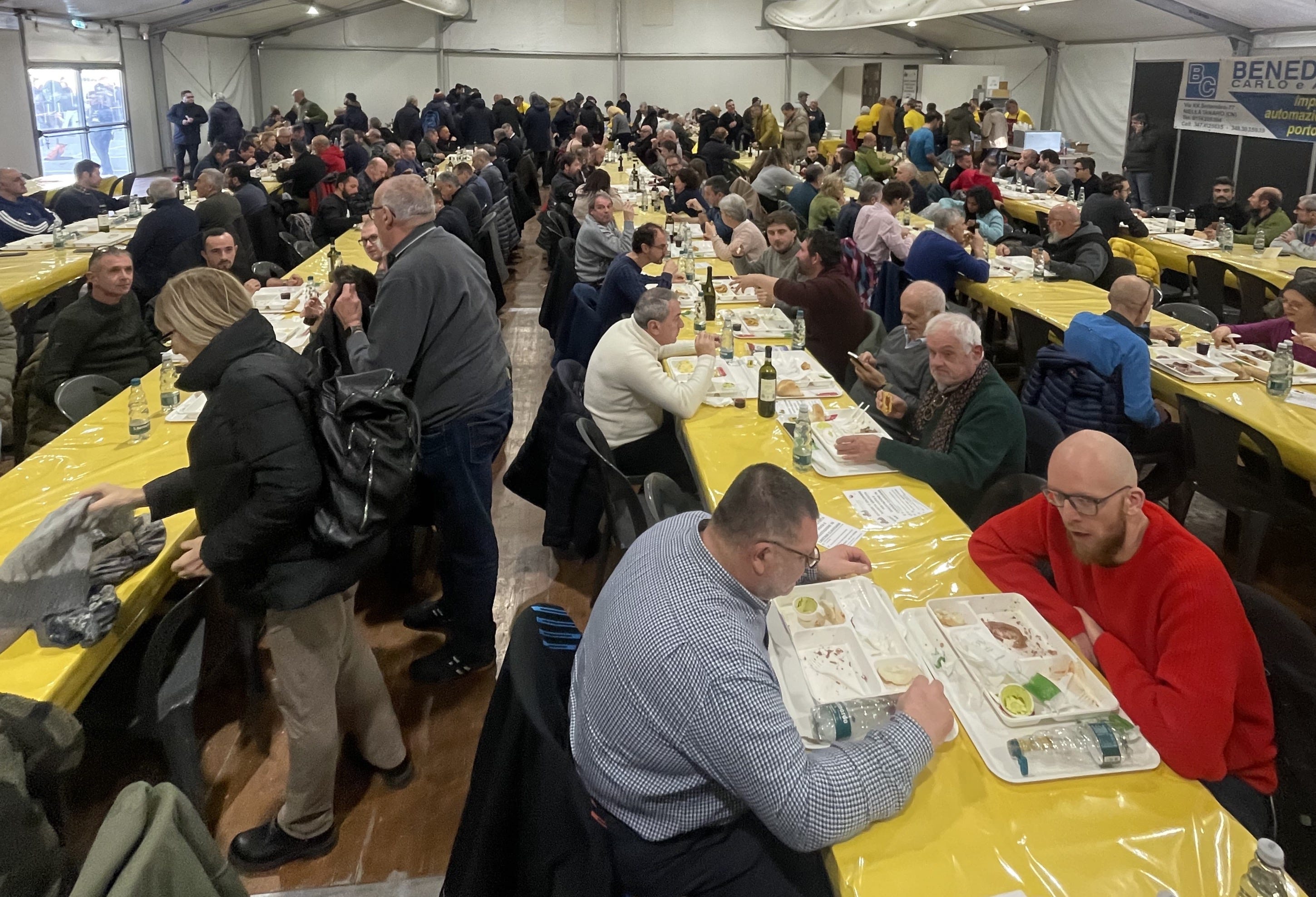
I’ve already spoken about these folks but I won’t be naming names. They are making wine for picnics, big family lunches and food festivals where you just need bottles on the table that seem to never disappear - fair enough, someone’s got to do it. If you pick up a bottle for less than €8 or £12 after reading this article you might be in this camp so you might want to lower expectations accordingly.
2. The “second/third Wines”
Barolo being Barolo there are many producers who have earned their space on wine lists due to the fact they produce Nebbiolo of galactic quality. Often, these bottles come at exclusive prices but thankfully they are not the only wines made by producer. Barbera and Dolcetto are the seconds and thirds, some wineries also make a Freisa or even an Arneis or other white to try and round out their lineup.
Much in the same way that Salvador Dalì designed the logo for Chupa Chups or the fact that they sell fridge magnets with the Mona Lisa on them at the Louvre gift shop, the lesser wines of these producer allows us to get a feel of their production albeit without paying top dollar but also without really experiencing the true magic they work.
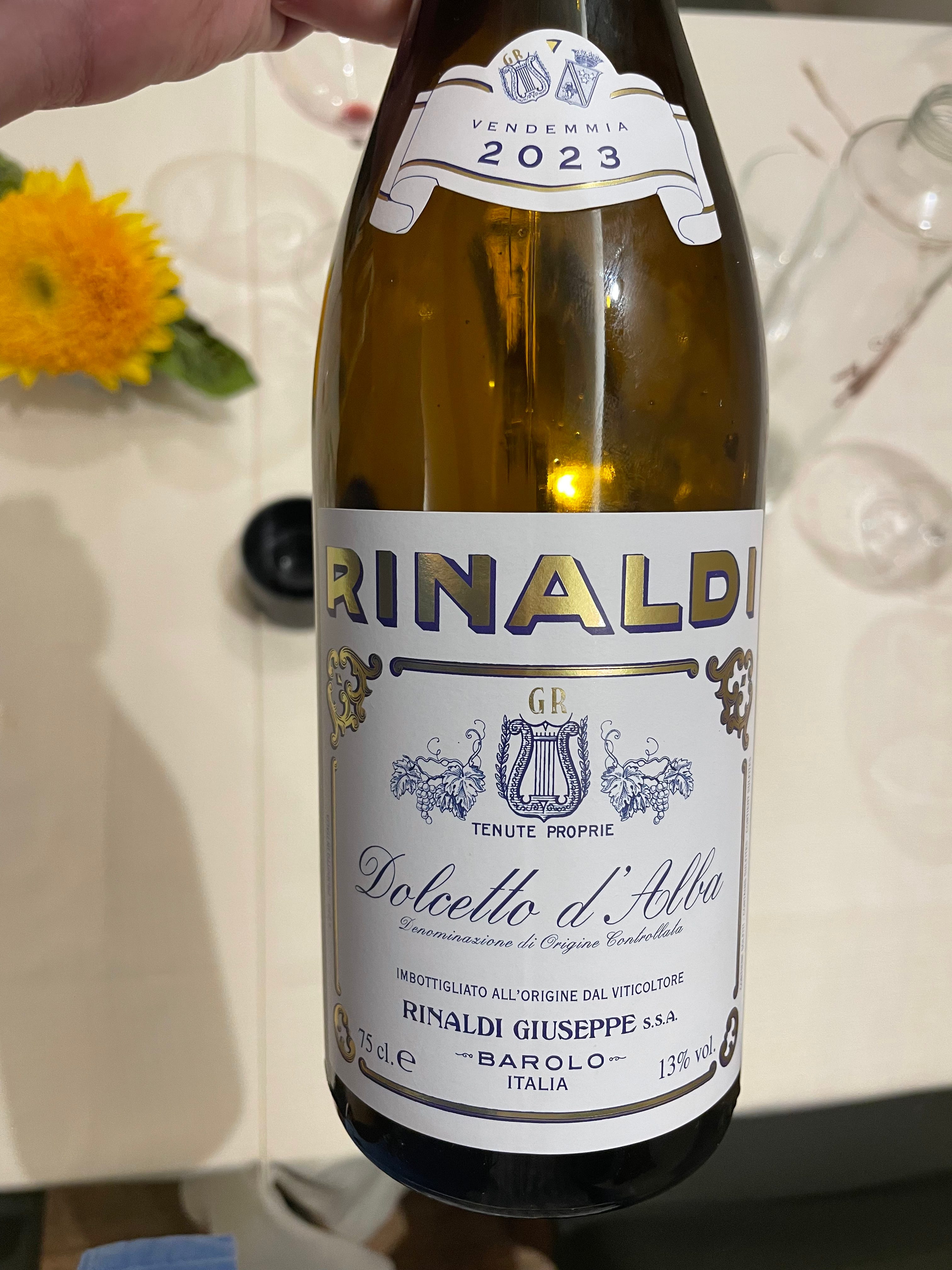
Though they are still works of art and great wines in their own right, the issues come when their raison d’être gets a bit lost in translation when they arrive on international wine lists. For example, comparing prices across a Piemontese and a London wine list3, Olek Bondonio (very good producer, though not a “household name”) gets a 2x markup put on his Langhe Nebbiolo from Piemonte to London.
Similarly, with everyone wanting to get their hands on wines from Philine Isabelle, her Barbera has the same markup from Piemonte to London.
Conterno Fantino’s entry level Nebbiolo Ginestrino, what they refer to as their ‘baby Barolo’, is also a similar story.
On the other hand, a big name like Giuseppe Rinaldi, who’s Barolo would easily see a price tag of +£400, has a more than 5x markup on their Dolcetto, being listed at €24 in Piemonte and £114 in London. It is only human to raise your expectation with a 5x markup on a wine and I can confidently say that this is a wine that will not meet it. I’m not saying it’s a bad wine at all, at €24 its a great wine - its position in a wine list has, however, got lost in translation.
Point being: pay Mona Lisa prices for a fridge magnet and you will be sad. Pay fridge magnet prices for a fridge magnet and you will be happy.
3. The passionate
Thankfully, there are some places that never got the whole “Barolo is King” BS memo. Instead of thinking “let’s plant Dolcetto where Nebbiolo doesn’t ripen” they flip the hierarchy on its head and instead reserve the best sites for Dolcetto. Much like Barolo is never labelled as Nebbiolo di Barolo, Dogliani, Ovada and Diano d’Alba DOCGs have all begun shedding their Dolcetto di _____” monikers, so keep an eye out for that.
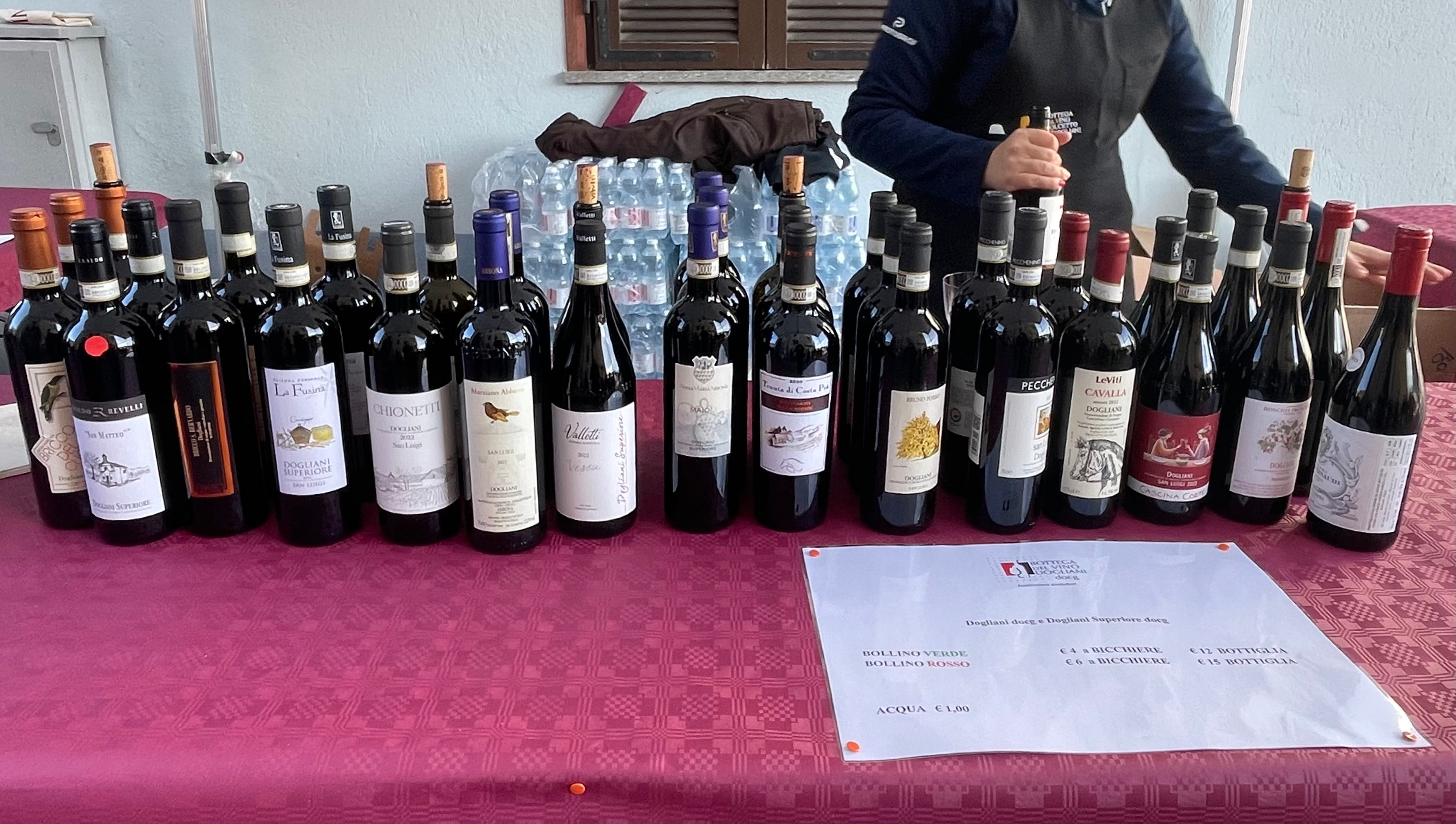
I’ll happily admit I’m biased toward the wines of Dogliani. Going back to the bangers and mash analogy, these wines are no chipolatas.
You can still have the wines made by the winery that was set up by the first democratically elected president of the Italian Republic, Luigi Einaudi, there. I’ve written about the quasi-religious act of making tripe soup there and the “what grows together goes together” aphorism definitely still checks out. There’s producers to suit everyone’s tastes here:
Though Tommaso Cappa vinifies his wines in stainless steel and concrete, I was shocked by how expressive and open his Dogliani is. Clearly someone who knows what he’s doing (he’s a vine specialist at Ceretto) but isn’t afraid to wander from tradition and make sparkling Dolcetto rosé and call it “Sa di cool” (tastes cool) as well
Cascina Corte treads the line between tradition and experimentation incredibly well. They produce 3 Dolcettos in total, one classic (red label), an old vine single vineyard bottling (green) and the same vineyard plot but vinified in amphora (white). Do I think the increase in price from the classic up to the single vineyard plots is worth it? Not really, but it’s an interesting learning experience and they are lovely people so why not. Distributed by Eataly (in the UK at least), their wines are a picturesque postcard of a lovely couple making lovely wines in their lovely house.
Marziano Abbona’s Papà Celso deserves a mention for holding the Dolcetto fort for many wine lists around. Another classic, though their real magic is Abbona’s Cinerino Langhe Bianco - a Piemontese Viognier that sings of orange blossom.
Valletti and Francesco Boschis both hold plots on the Pianezzo cru sight. Without getting into the weeds about the cru sites of Dogliani, Pianezzo is amongst the highest and therefore can deliver the acidity that Dolcetto sometimes lacks (and one of the reasons people don’t give it as much thought as they should)
San Fereolo - some people refer to her wines as “baby Barolo”. Hopefully that rather demeaning label dissolves on contact with your first sniff of this wine in all its rich, leathery, savoury tones. Besides, its written on the label “In this bottle, you will find, brought back to light after years of darkness and silence, the unyielding dialogue between time and matter in a physic wine – a nature of which we are a part and from which we could never be separated”. A phenomenal wine, should you be able to get your hands on it…


In Ovada there is Borgatta (unclear if his wines are still certified within the DOC), mentioned recently in Empty Bottle Clean Plate’s great write up of VinNatur - sounds like a cool couple, they make a damn cool wine. Maybe not for those who don’t like any VA in their wines but it does help to balance Dolcetto’s natural lack of acidity in this case.
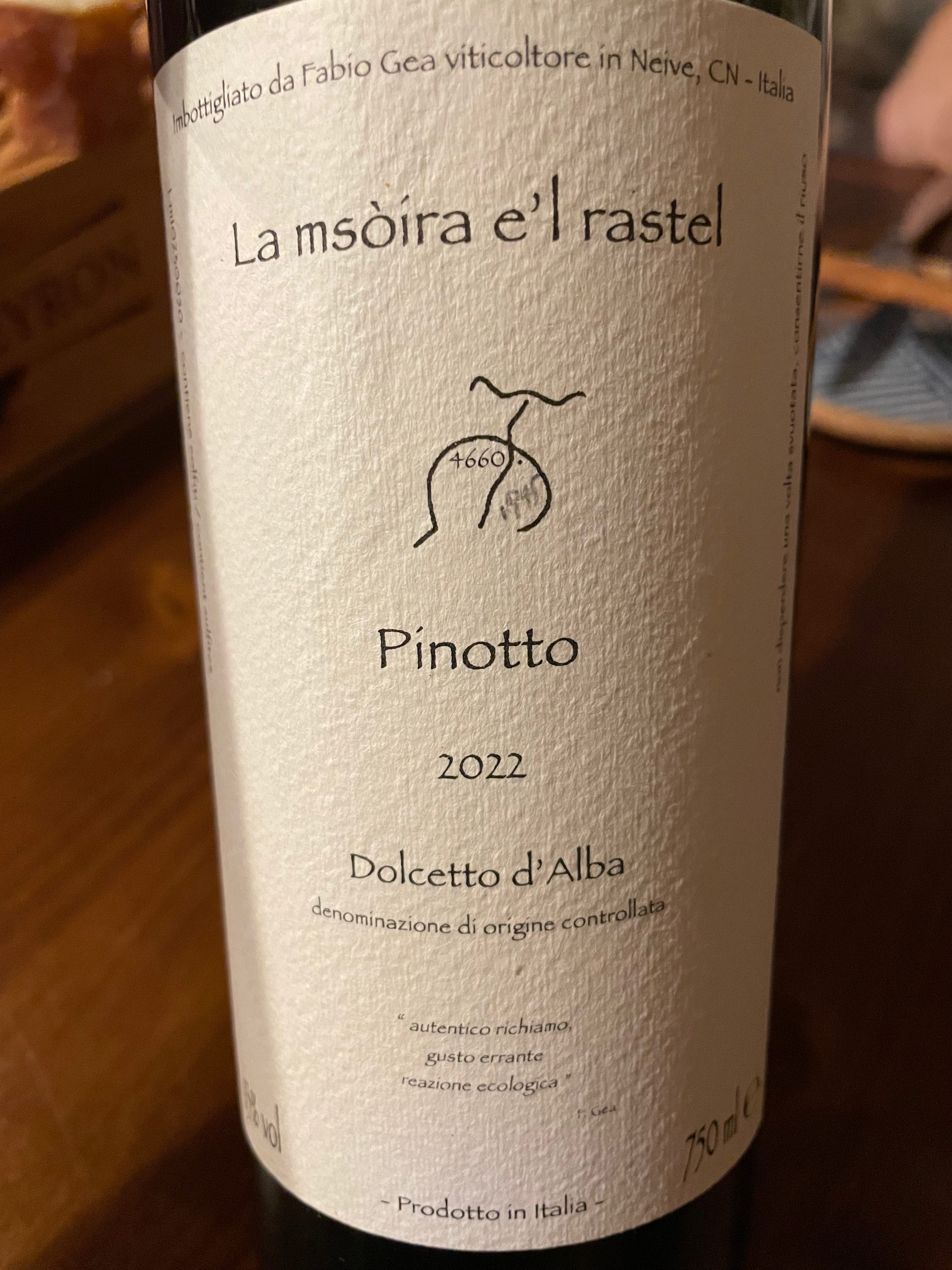
Further afield, there is also Dolcetto d’Alba and d’Asti. Fabio Gea’s Pinotto and Pino have a similar mission statement to San Fereolo. (Is his label a scythe and a sickle, or is it an abstract interpretation of his bum?)
He doesn’t sell his wines in the Langhe as he demands delivering them by horse and cart, stating explicitly that if he were to arrive at wherever wanted to stock them and he didn’t find any hay for his horse, he would turn around without stopping (though it is unclear if he owns a horse, or indeed, a cart). Imported by Gergovie wines in UK though if you are concerned about low sulphur wines and transportation, Acini wine shop in Cuneo is definitely a spot to go in Piemonte
The Piemontese Dolcetto-heads (?) probably wouldn’t let me get away without mentioning Cascina Penna-Currado, which turned heads after being rated 93 points by Wine Front (not that I’m a huge believer in scores but any sign of love for the underdog is always welcome). Luca Currado Vietti and Elena Penna (of Vietti big boy Barolo fame) decided to not go into retirement and set up their own project instead. So far with two Nebbiolos, a Dolcetto, Barbera and a Timorasso it seems like it’s going great and I have also heard rumours about the Barolo to come. Since its a new project its not so ubiquitous in wine shops but I’m sure that will change since my oh my this dolcetto is probably one of the most perfumed I had ever tasted - reminiscent of a tea-fanatic making you try some strange stuff they’ve bought back from a trip to china when all you’d ever drank was PG Tips.
(4. Bricco del Drago)
For many reasons, Bricco del Drago gets its own category. Produced by Poderi Colla since 1969, the original owner of Bricco del Drago (the dragon hill) realised that the Dolcetto grown there was quite different. To give it a bit of finesse they decided to add a small bit of Nebbiolo to make what used to be called Dolcetto Nebbiolato or Nebbiolated Dolcetto in English - 85% Dolcetto and 15% Nebbiolo. In 1987 it was given its own presidential decree making it the first “Super Vino da Tavola”4. A perfect wine for coaxing even the most ardent of Nebb-heads out of their stupor.
Now you are equipped with a selection of some very interesting Dolcetto. The last thing to look out for that could be of interest is Ormeasco di Pornassio DOC. Ligurian Dolcetto but here known as Ormeasco (from the town of Ormea) instead of Dolcetto. The appellation also includes rosè wines with the beautiful name of Sciac-trà (shak-TRA) meaning squeeze-pull in the Ligure language to reflect the quick time spent in the press. Rarely seen outside of the region and is mostly made from a distinct biotype of Dolcetto known as Nibiö - slightly more structured and authoritative than its classic Piemontese counterpart (though some Piemontese producers do have small parcels of it).
//Post script nugget of information that feels necessary to add to a dolcetto article but I haven’t researched it enough/this article is already long enough: The oldest dolcetto vines in the world are in Australia (use that in a pub quiz round for wine nerds as you wish). Best’s Great Western planted them in the 1866 thinking they were Malbec and it was only until the 1980s that they were correctly identified as Dolcetto (though doubts had already been raised about not being Malbec decades earlier). I’ve never had a bottle as it doesn’t seem to be imported anywhere in Europe.
Ok, yes, you can make Dolcetto Frizzante in the Piemonte DOC, but considering this is almost exclusively done in an autoclave (pressurised tank) i’m going to go ahead and say that that production probably isn’t very traditional/historic
Osteria il Veglio and Noble Rot respectively
Basically this meant that where usually producers can only put Langhe DOC on the label or the variety if permitted (as in Langhe DOC Nebbiolo) Poderi Colla was given special compensation to call their wine Langhe DOC Bricco del Drago
This is so informative, thank you!
One of my favourite Piemontese grapes. I've got a Dolcetto piece in my long list of Piemontese wines to write about. If I can also throw Bartolo Mascarello, Marchesi di Barolo, Gillardi Cursalet Dogliani and Olek Bondonio into the mix of recommendations too!