
No stems please, we're apples
Cider might work like wine but apples don't always work like grapes

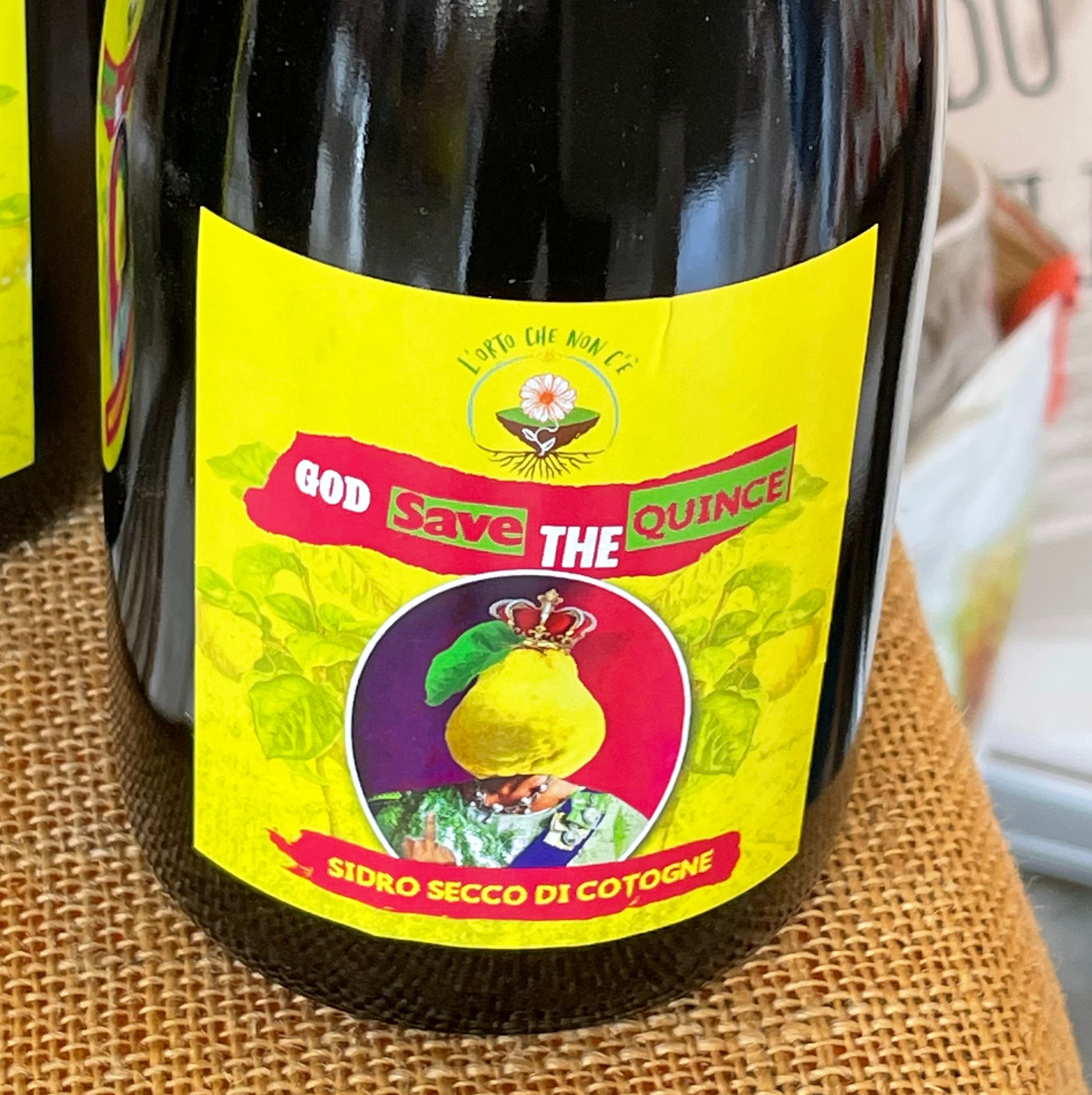
When I started leading cider tastings at university and later with Slow Food, one of the most common questions would invariably be “is there a way I should taste cider?”
At first, I thought this was a strange thing to ask. The people who came to these tastings were no strangers to wine or indeed any other sort of culture specific fermented products. Yet clearly a stumbling block existed in their minds between their understanding of wine and how they were going to ever understand cider.
For a long time, I politely dismissed the question. I thought they should just take everything they know about wine and cast that knowledge over cider, but it doesn’t work like that. I would refer often refer to it as taking off your grape tinted glasses and instead approach concepts like terroir with apple tinted ones. Luckily, I learnt it isn’t that simple.
In order to build an understanding of cider with parity to an understanding of wine, a few things must be pointed out
Red or White
Starting with the most important, or the most difficult, depending on how you look at things.
There is no Red-White divide when it comes to cider.
It’s the first question to the table when the wine list is opened (presuming the person holding it has opted to decide on a bottle democratically…). Red-White nicely splits a very large and diverse category of drinks roughly down the middle and relies only upon the ability to discern two colours from each other.
Cider can’t be meaningfully divided by colour since it doesn’t get its colour the same way a wine gets its colour. Since wines get their colour from grape skins and grape skins also contain tannins, basic assumptions can be made between darkness of hue and strength of tannins (with obvious exceptions in light coloured, high tannin varieties).
In the case of cider, you need to pay attention to variety or a more general category of variety, not colour. Thankfully, in the pockets of the world that have a tradition of making tannic cider, they categorise their apples accordingly. In England, for example, these are described as bittersweet and bittersharp if they have high tannins but low or high acidity, respectively. If they lack tannins, they are simply referred to as sweet and sharp on account of their acidity.
“But tannins are perceived as astringency, not bitterness!” I know, I know. However there are some tannins that are perceived as bitter, albeit a small minority, though these crop up more often in cider than they do in wine (though I still wouldn’t say its common)
The reason why colour ≠ tannins in cider, for those that are interested
I get that some people might not like the science, but I think it’s pretty cool and I definitely didn’t write a whole article on this particular subject before thinking it was a tad overwhelming…
The reason that cider doesn’t have a red-white divide is all to do with structure. Apples can’t be pressed straight away like grapes can, they must first be milled into a coarse pulp. Straight away, this removes the possibility that is available to winemakers of managing grape juice, with little/no colour or tannic structure, separately from the grape skins, that bring all the colour and tannins, since apple skins get milled along with the pulp.
In winemaking, the process of getting the colour and tannins from the skins into the juice is called maceration and is best likened to making a cup of tea (steeping a flavour giving thing in a less flavoured liquid). This is/can be done in winemaking because a) a grape is soft enough to squeeze its juice without too much disruption of the skins and b) the flesh of the grape doesn’t have much tannin, if any at all so the difference between skins and no-skins is large. Not only can apples not juiced without smashing them up, they also store their tannins throughout the apple. Yes, there are higher concentrations in the skins but being a larger fruit the skins are nothing compared to the fruit as a whole.
In cidermaking, maceration refers to something else completely! Maceration is the period of time after the apples/pears have been milled into a coarse pulp but before they have been pressed. This allows tannins that were previously locked inside the cells of the apple to be exposed to oxygen which, as we all known, causes apples to go brown. This browning is the tannins tanning! The tannins are being exposed to oxygen and irreversibly binding to the pulp and making it go brown. When it then comes to pressing this macerated pulp, the tannin content of the juice will be lower than if it was pressed immediately with no contact to the air.
“So lighter in colour means more tannic than a darker colour?” you may reasonably ask.
Unfortunately it isn’t that easy either on count of several reasons. Much like how grapes differ in their colour to tannin ratio (e.g. Nebbiolo) so too do apples in the amount that they brown. Whilst colour of juice gets deeper during maceration, it also can get lighter again during fermentation1. Perry pears in particular need to be macerated so that their tannins too don’t join together during fermentation. Whilst this would appear as flaky sediment in a wine, pear tannins can easily conglomerate into tofu/brain like structures floating around in a fermenting vat.


Sugar, sugar
You’ll notice the varieties being categorised as bittersweet or bittersharp. Remember that this is a categorisation of the variety and not what the cidermaker chooses to do with it.
The sweetness that awaits you in the bottle will be presented as something on the “dry, off-dry, medium, medium sweet (?), sweet” spectrum. As far as I’m aware, this spectrum doesn’t follow the German Riesling-esque rigour of actually having strict definitions for the sugar content for each term. As with many things in the world in general, I hope that changes some time soon.
Of the classic unfortified sweet wines of the world, very few of them undergo skin-contact. They are generally aiming for a balance of acidity and sweetness, without tannins getting a look in on the action. Besides, it is generally ill advised to macerate grapes affected by noble rot whilst it would be simply impossible to macerate an ice wine since the grapes would thaw.
Residual sugar is more common in cider. Is this because of tradition or consumer expectation? I’m not sure, it is definitely a topic I will come back to. When cider and perry is made via some form of arrested fermentation (stopping fermentation before its 100% complete, something else I'll come back to) they are still able to retain a lot of their tannic structure since this was there from the start based on the varieties chosen by the cidermaker. This is in direct contrast to wines made by arrested fermentation (sweet Rieslings) which often see very minimal skin contact with winemakers trying to minimise tannic extraction.
I think this opens a unique door for cider, the interplay of sugars, acidity AND tannin is something that is very rarely found in wines despite the fact it has a ver large scope of pairings.
Alcohol and terroir
In discussions about cider and wine, someone invariably brings up representing terroir. This is sometimes followed up with a mention of grapes having orders of magnitude more polyphenols, and therefore a much wider spectrum of possible variation, than apples.
Without going into a discussion of the polyphenol content of certain laudable apple varieties, or challenging people on whether or not you can actually perceive all of those polyphenols, one thing does remain true: this “phenolic representation” that wine undoubtedly has also comes with quite a sizeable serving of alcohol. There’s nothing wrong about that in and of itself but this alcohol content is only getting higher and higher as the climate is getting warmer and warmer. I’ve had some lovely 16% Cannonau in Sardegna but would I want to open a bottle for lunch? Maybe not.
Cider can happily sit at half the alcohol of wine. Yes, it is also witness to the same increase in temperatures but at least it’s starting from a lower step on the ladder that it will undeniably have to climb. Two 75cl bottles amongst three friends can easily be sunk over lunch and people can get on with their day afterwards. St John in London has even started serving perry for breakfast!
Thanks for reading. Next time I will present a little “cider starter pack” of three ciders that represent everything I've been talking about so far. They might be quite UK-centric, so if anyone wants to consult for USA (where I have my second largest readership) then please get in touch, cheers!
If you want to get really into it that’s because of the juice undergoing reduction during the fermentation
>> Apples can’t be pressed straight away like grapes can, they must first be milled into a coarse pulp. Straight away, this removes the possibility that is available to winemakers of managing grape juice, with little/no colour or tannic structure, separately from the grape skins, that bring all the colour and tannins, since apple skins get milled along with the pulp.
Is peeling the apples before pulping them impractical / not a done thing for cider-makers?